
Built for the islands: materials that stand up to salt air and humidity
The finishes that look beautiful on day one and still look that way years later, after trade winds, salt spray and wet seasons.
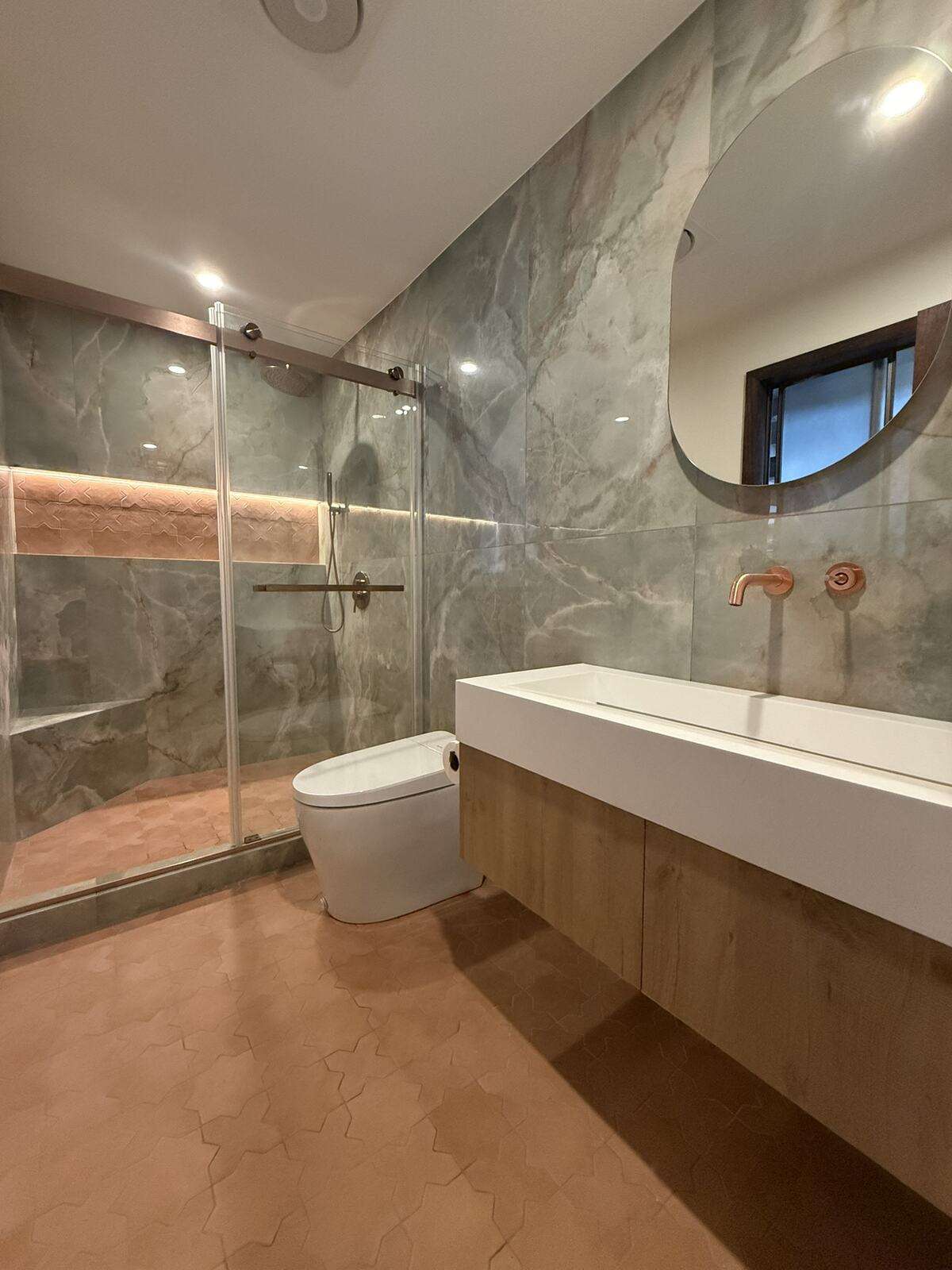
A remodel on O‘ahu lives a different life than one on the mainland. Salt air drifts miles inland, humidity rarely lets up, and termites are a fact of island life. The good news: with the right choices up front, a kitchen or bath here can stay beautiful for a very long time. These are the materials we reach for again and again.
Hardware and fixtures: choose the finish, not just the color
Brushed gold, matte black and brushed nickel are all popular, but what matters most is what sits underneath. Solid brass bodies and quality factory finishes hold up far better in humid air than plated, lightweight fixtures. Near the ocean, and anywhere outdoors, we specify marine-grade (316) stainless steel for hardware, because ordinary stainless can spot and pit in salt air.
Tile: porcelain does the heavy lifting
Porcelain tile absorbs almost no water, so it shrugs off humidity, wet feet and the occasional sandy towel. Today’s porcelain also comes in convincing stone and wood looks, like the travertine-look walls in several of our showers. When a client wants the real thing, natural stone is absolutely possible; it simply needs to be sealed well and resealed on a schedule.
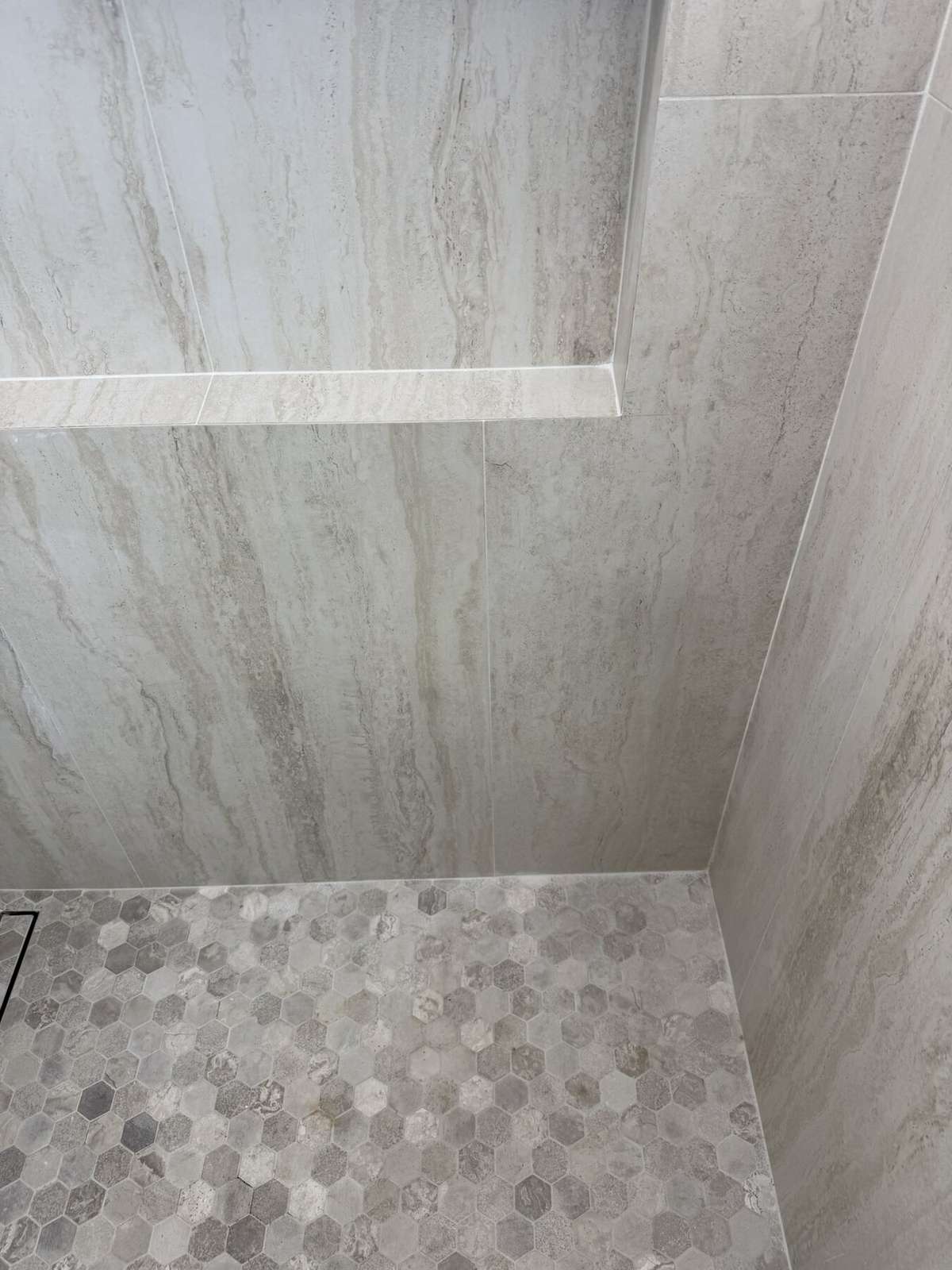
Countertops that forgive
Quartz is our most-requested surface for good reason: it is non-porous, so it resists stains and doesn’t need sealing. Natural stone brings one-of-a-kind character and works beautifully with a little more care. We walk through the trade-offs with you before you fall in love with a slab.
Wood, the island way
Wood brings warmth that nothing else can, which is why walnut and oak appear in so many of our projects. Because wood moves with humidity, how it is finished and installed matters as much as the species. Cabinet boxes, framing and trim also need protection from termites, so we use treated materials where they belong and keep wood off wet areas.
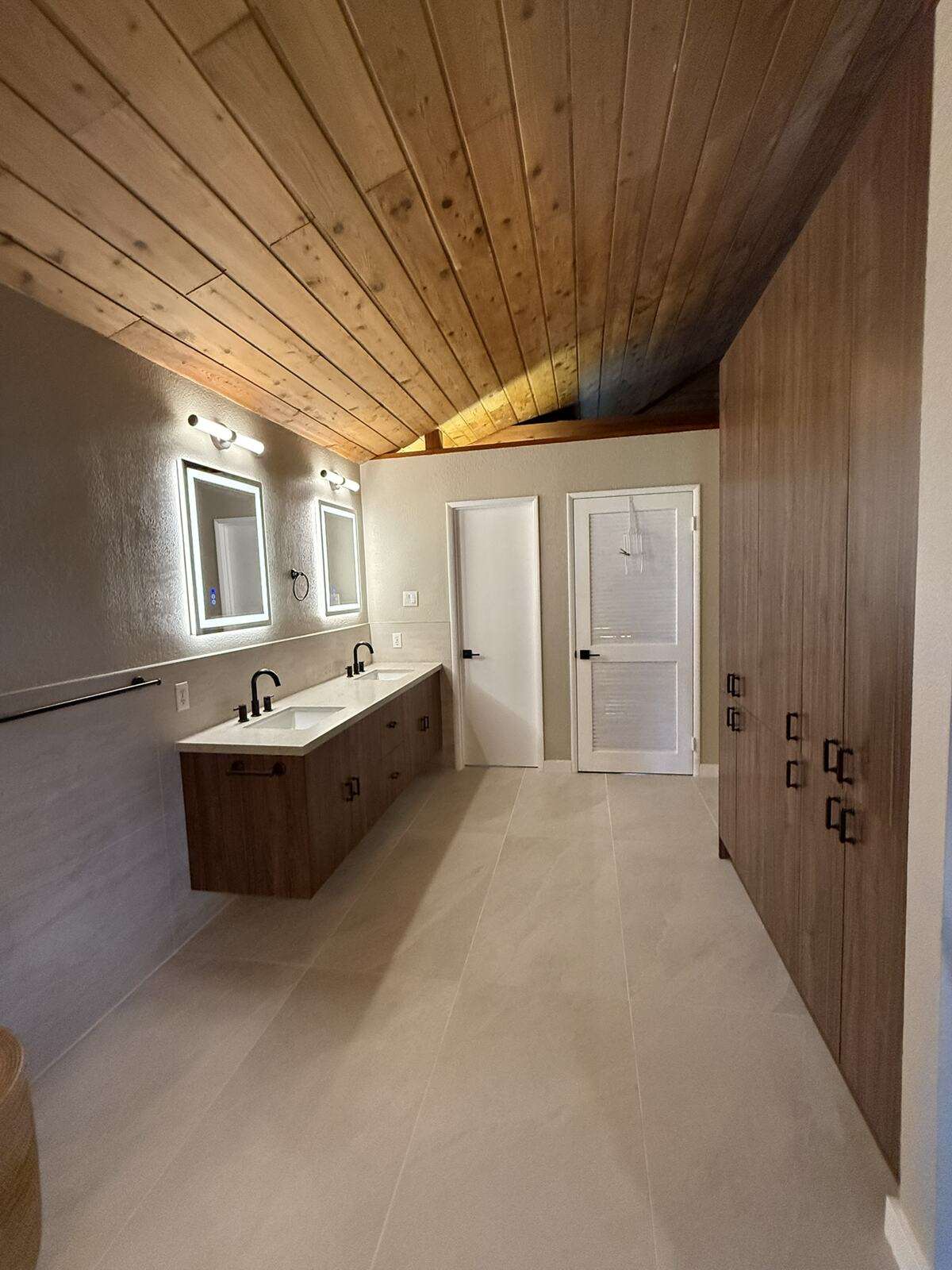
Moisture has to go somewhere
The most important material in an island bathroom may be the one you never see: ventilation. A properly sized exhaust fan that vents outside, a waterproofed shower system behind the tile, and good airflow do more to prevent mold than any finish. We build every wet area with that in mind.
The short version
- —Choose solid, quality fixtures and marine-grade hardware near the ocean
- —Lean on porcelain tile for wet and high-traffic areas
- —Pick quartz for low maintenance, stone for character
- —Protect wood from moisture and termites
- —Never skip ventilation and waterproofing